BSc Final Thesis
CubeSat Release Mechanism.
3D-printed Hold-Down Release Mechanism for CubeSat missions
- Mechanism mass
- 15 g
- Load held in traction testing
- 140 N
- Average burn-wire release time
- 4 s
- Thesis grade
- 10/10
A 3D-printed, single-shot mechanism that holds a CubeSat’s solar panels closed through launch and releases them with a burn wire, load-tested to 40% above its design case.
The problem
Deployable solar panels and antennas have to stay folded against a CubeSat through the loads of launch, then release reliably, once, in orbit, without leaving any debris behind. That is the job of a Hold-Down Release Mechanism (HDRM). Commercial ones are expensive, so my thesis asked whether a low-cost, 3D-printed mechanism could do the same job.
What I did
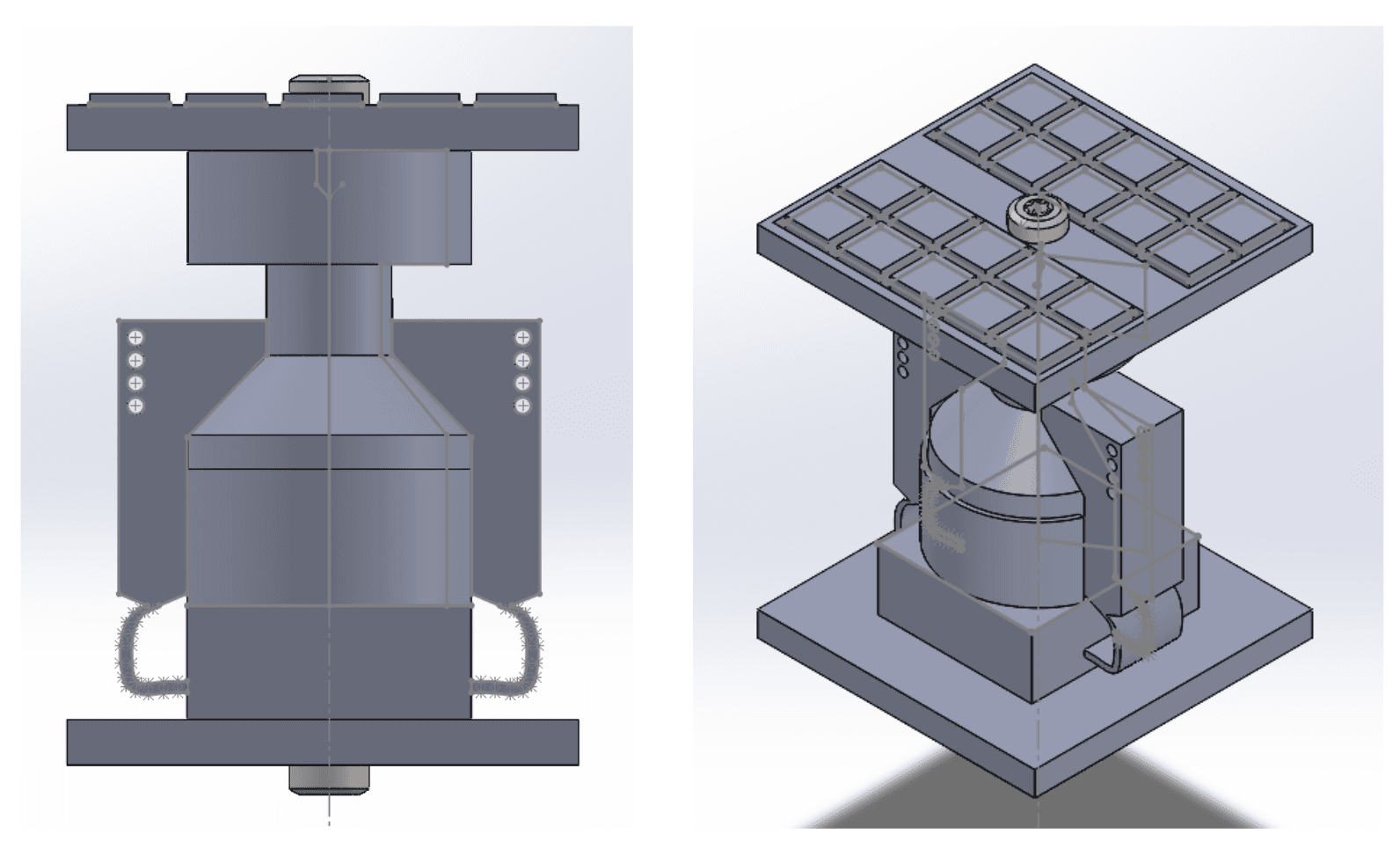
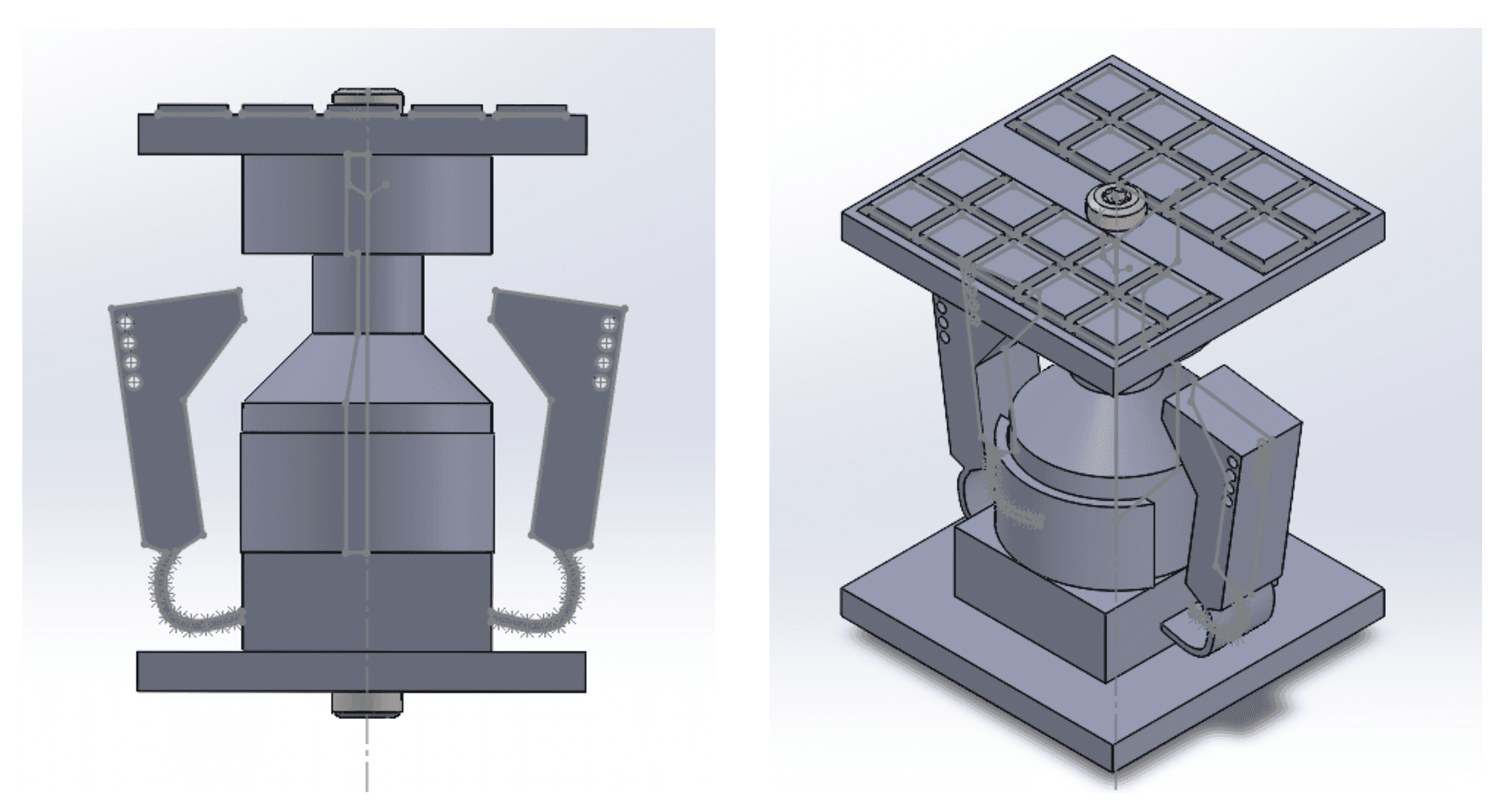
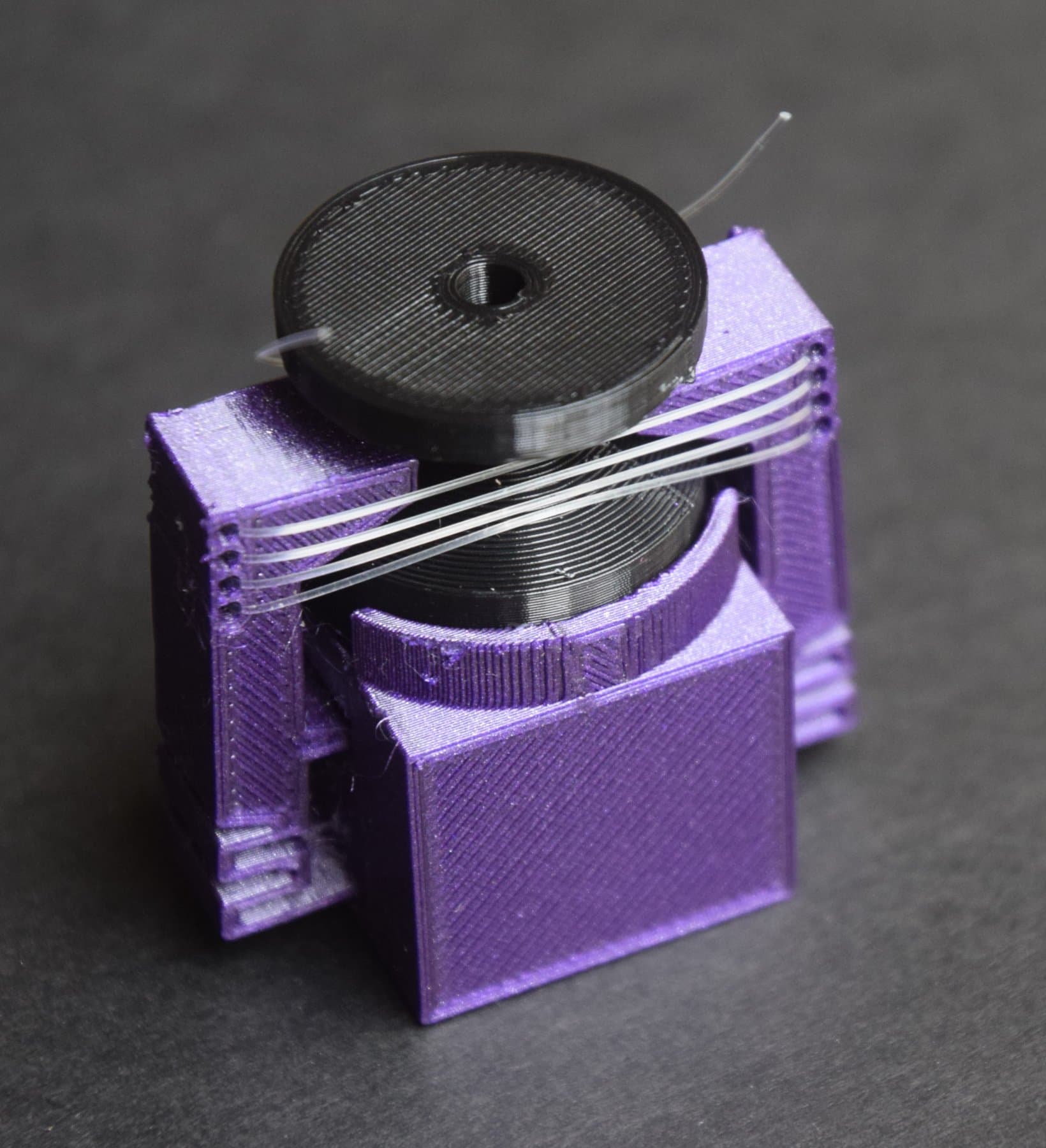
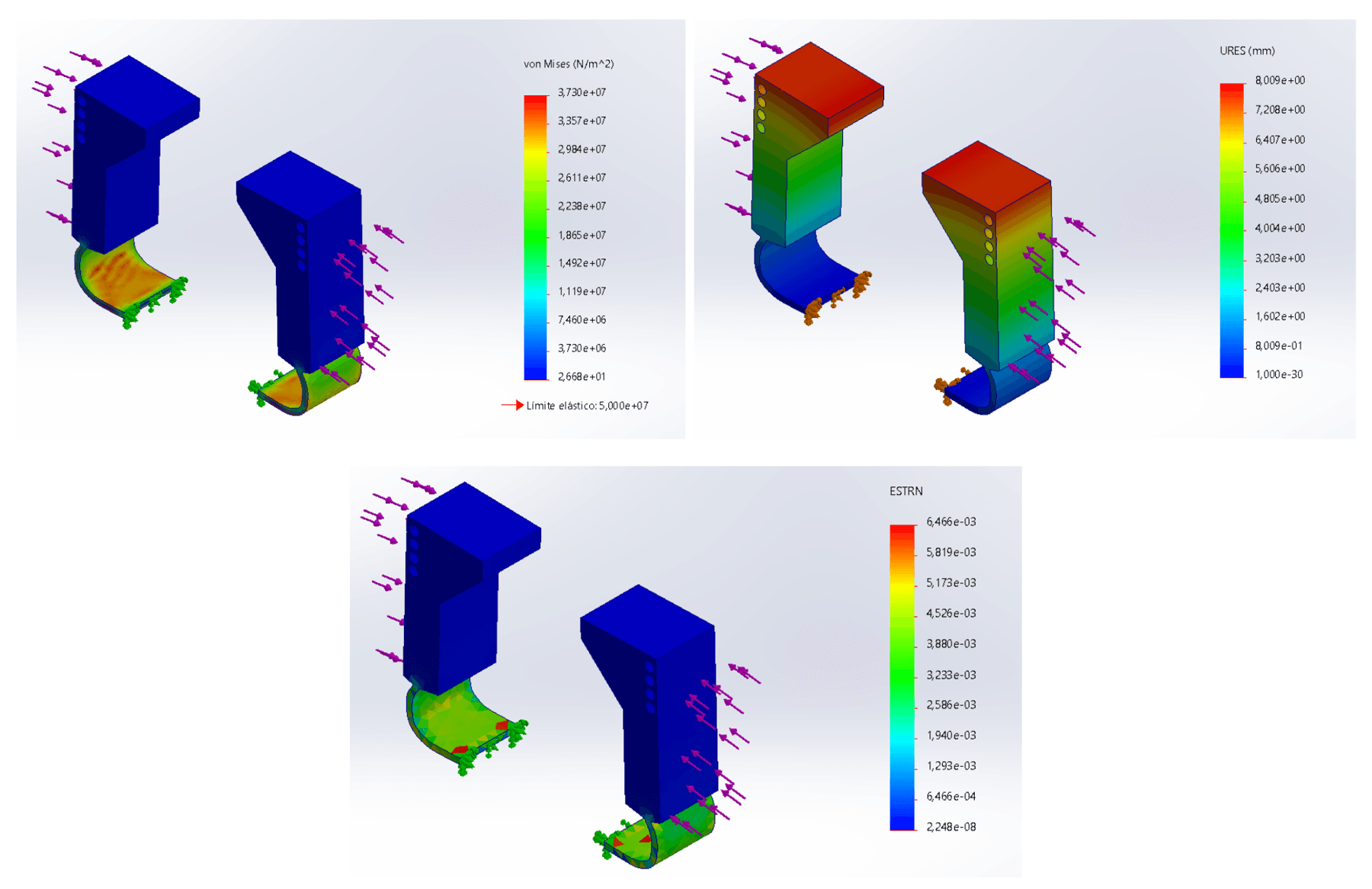
I designed a single-shot HDRM 3D-printed in PLA: two releasing arms are held closed by a nylon line, and a NiChrome wire melts through that line by the Joule effect to release them. I used SolidWorks FEA to compare two joint geometries and picked a 1 mm accordion joint for the best balance of flexibility and strength, then redesigned the arms with a retaining tooth and lateral guides so the retention link can’t move sideways. I 3D-printed, assembled and tested the prototype.
Highlights
- 01Single-shot HDRM 3D-printed in PLA, released by a NiChrome burn wire
- 02FEA-driven redesign: an accordion joint outperformed a simple circular one
- 03Held 140 N in traction, 40% above the 100 N design case, with no deformation
- 04Every requirement in the evaluation matrix verified — about TRL 4
Results
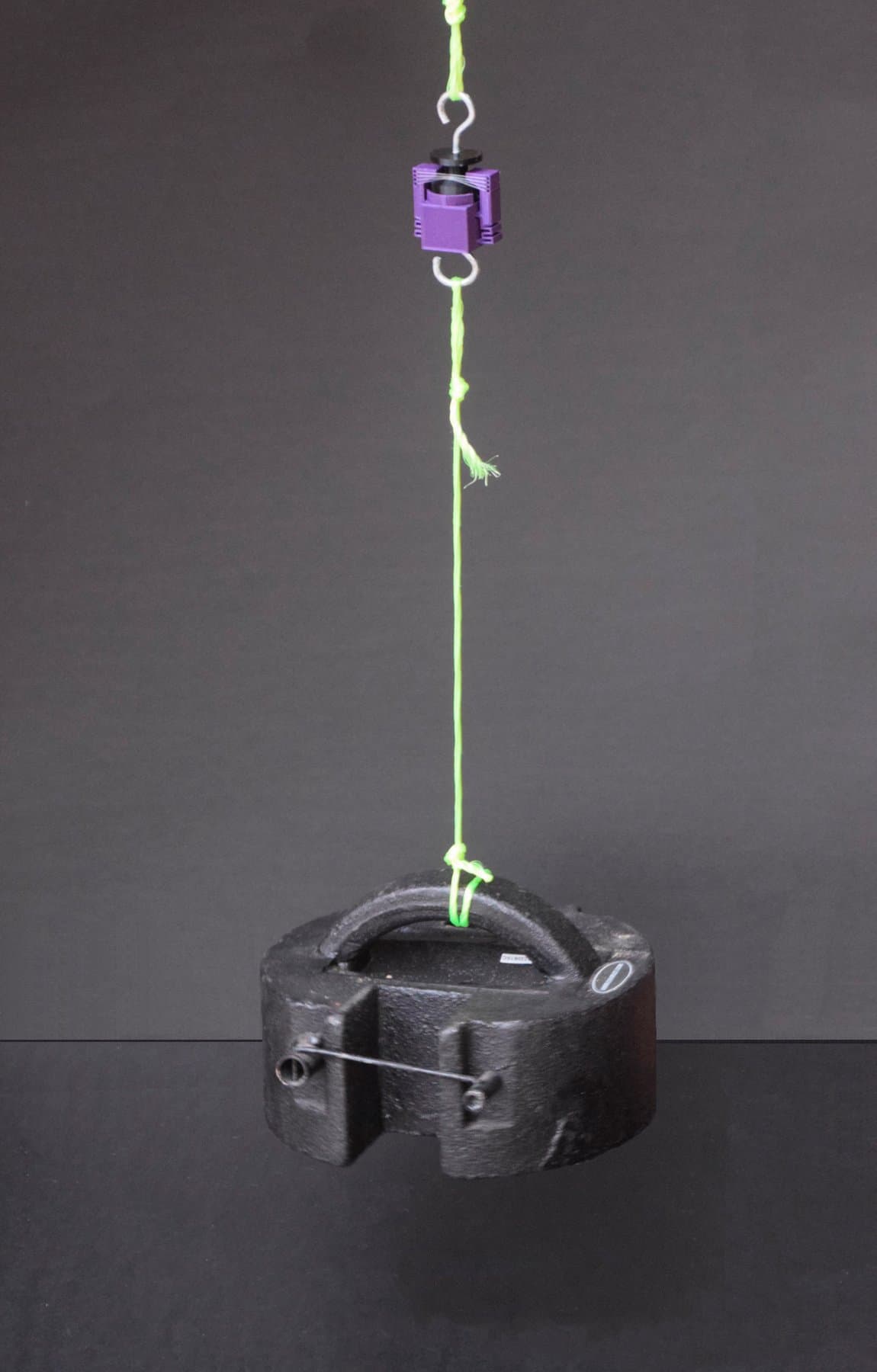
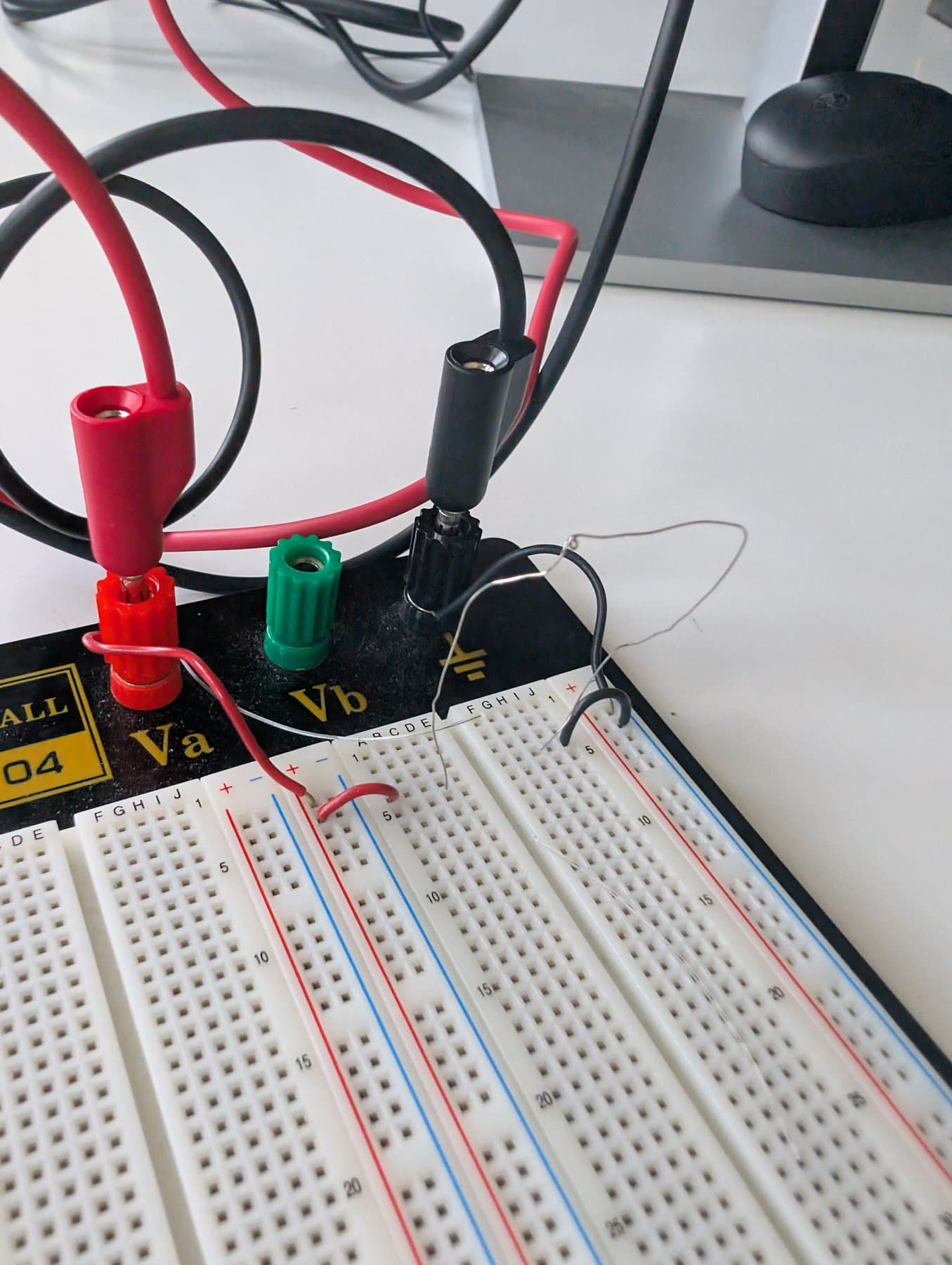
Outcome
Every evaluation parameter was verified, which places the prototype at roughly TRL 4. Next steps would be space-grade materials, thermal-vacuum testing, and a reusable version based on shape-memory alloys.